

P
A B C D E F G H I J K L M N O P Q R S T U V W X Y Z
PRIO-PUTT
PAGO-PAUL PAUL-PAVI PECC-PENF PENF-PETE PETE-PHEN PHIL-PINE PINE-POLR POME-PORT PORT-PREM PREM-PRIO PRIO-PUTT
Only 95 and 100 NJP wines (Nenad Jelisic Points) are presented as the best vintages.
If for some wine behind “the best vintages” stands “none”, it means that none of the wine's vintages got 95 NJP or 100 NJP.
Priorat grapes, for red wines: Garnacha Tinta (also called Grenache or Grenache Noir), Cariñena (also called Carignan), Cabernet Sauvignon, Syrah and Merlot. For white wines: Garnacha Blanca (also called Grenache Blanc) and Macabeo (also called Viura). (2026-03)
Priorato, another name to Priorat. (2026-03)
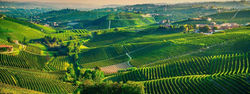
Priorat ploughing, is the only method, due to the fact that the majority of vineyards in Priorat have steep to very steep slopes and have very limited spaces between vines, that works to plough the soil around the vines. The method, which is much gentler than the mechanical one, contributes to: improving of soil structure (which makes the soil porous and airy) and better oxygen- and water supply (the airy soil makes it easier for air, water and nutrients to penetrate down, which helps the vines to grow stronger). (2026-03)
Priorat soils, vary, but they are characterized for a mixture that consists of black-reddish slate and mica. The mixture, which is called llicorella, gives the wines a unique mineral character, good drainage properties, and both reflects sunbeams and stores the solar heat. When the sun has gone down, the stored solar heat in the mixture still emits the heat, which helps the ripening of the grapes. During the summer, the temperature of the mixture reaches 50°C. (2026-03)
Priorat the best vintages, 2000, 2001, 2003, 2004, 2005, 2007, 2008, 2009, 2010, 2012, 2013, 2014, 2015, 2016, 2017, 2018, 2019, 2020, 2021 and 2022. (2026-03)
Priorat the best wines, Camí Pesseroles, Cartus, Clos Martinet, Finca Dofi, L'Ermita, Mas Doix Costers de Vinyes Velles, Mas Doix 1902 Tossal d'en Bou and Mas Doix 1903 Coma de Cases. (2026-03)
Prosecco, both an Italian wine, and Italian wine district that is located in wine region of Veneto and Friuli Venezia Giulia. The wine district is 270 km long and extends over 651 municipalities. The absolute best wines come from appellation Asolo and appellation Conegliano Valdobbiadene, both of which are DOCG- classified. The vineyards are located between 50 and 500 m above sea level. Most of the wines that come from here are sparkling. Non-sparkling wines are also produced, but to a much lesser extent. Prosecco gets its bubbles through the tank fermentation method. Sugar and yeast are added to the base wine, which is then fermented a second time in a steel tank under pressure. The wine is then aged between 18 and 24 months in a steel tank before being poured into a bottle. In addition to the tank fermentation method, a method called metodo ancestrale is also used, but not so often. The method involves that the wine begins its fermentation in a tank and that the fermentation is then completed in a sealed bottle. This means that one pours the wine into bottle before it is fully fermented. The wine is never disgorged, and it is sold with the lees left in the bottle. This type of Prosecco goes by the name Col Fondo - which means "with lees ". (2024-04)
Prosecco grapes, several different local grape varieties and the most grown of these are Glera. (2024-04)
Prosecco soils, vary a lot, clay, sandstone, limestone, gravel, etc. (2024-04)
Prosecco the best vintages, unlike many wines, Prosecco is really a wine to drink when it is young. In practice this means that the longer a Prosecco-wine is aged, the less powerful the bubbles will be, which is not good for the flavour of the wine. That means the vintage is mostly irrelevant when Prosecco-wines are in question. (2024-04)
Puligny-Montrachet, a French appellation that belongs to the wine district of Côte de Beaune, which in turn belongs to the wine region of Burgundy. The appellation consists of 4 Grand Crus (crus = vineyards) and 17 Premier Crus. All four Grand Crus have their own appellations. To these four Grand Crus belong: Bâtard-Montrachet, Bienvenues-Bâtard-Montrachet, Chevalier-Montrachet and Montrachet, and to these 17 Premier Crus belong: Champ Canet, Champ Gain, Clavaillon, Clos de la Garenne, Clos de la Mouchère, Hameau de Blagny, Le Cailleret, La Garenne, La Truffière, Les Chalu-Maux, Les Combettes, Les Demoiselles, Les Folatières, Les Perrières, Les Pucelles, Les Referts and Sous le Puits. The appellation has 235 ha under vine and of these 114 ha are classified as Premier Crus and 21 ha as Grand Crus. The average yield is 52 hl/ha. The interesting thing is that the Grand Crus Bâtard-Montrachet and Montrachet belong both to this appellation and appellation Chassagne-Montrachet. Qualitatively, the Chardonnay wines from this appellation are considered to be better than those from the Chassagne-Montrachet appellation. Right now, one hectare of Montrachet costs 23,4 million GBP (approximately 295 million SEK) and thereby it has the world's most expensive hectare price. (2024-04)
Puligny-Montrachet grapes, dominates Chardonnay (over 99%), the little rest belongs to Pinot Noir. (2024-04)
Pump-Over method, Remontage in French, a method where the must is pumped from the bottom of the fermenter over the grape skins and solids (called cap in English or chapeau in French). (2024-04)
Puttony, is a basket that contains 20 to 25 kg of grapes affected by noble rot (Botrytis cinereas). The grapes affected by noble rot are trampled into a sweet mass, called Aszú, and the more of the sweet mass is added to the must, the higher is the level of sugar. According to the Hungarian wine legislation, the following classification is made taking into account level of sugar: 3 puttonyos (60 to 75 kg of the grapes affected by noble rot, give 6 to 9% residual sugar), 4 puttonyos (80 to 100 kg of the grapes affected by noble rot, give 9 to 12 % residual sugar), 5 puttonyos (100 to 125 kg of the grapes affected by noble rot, give 12 to 15% residual sugar) and 6 puttonyos (120 to 150 kg of the grapes affected by noble rot, give 15 to 18% residual sugar). In addition, there are two more classes: Tokaji Aszú Eszencia (more than 18% residual sugar) and Tokaji Eszencia (40 to 70% residual sugar). The latter wine is so sweet that it takes several years to ferment. For comparison, it can be mentioned that Sauternes-wines have a sweetness level equivalent to about 4 puttonyos. In 2014, Tokaj Export Council abolished 3 and 4 puttonyos. (2024-04)
Puttonyos, Hungarian, = level of sugar, see more under Puttony. (2024-04)


NJ Wines
 |  |  |  |  |  |
|---|